Featured
Policy Changes Influencing Debt Relief Procedures for Beg...
The smart Trick of Chapter 7 Essentials Before Filing Tha...
Pricing Transparency That Financial counseling for vetera...
Economic Uncertainty and How More Americans Need for Debt...

The Ultimate Guide To Why Dating and Debt: How Financial Health Impacts Modern Relationships : APFSC Can Help
Table of Contents
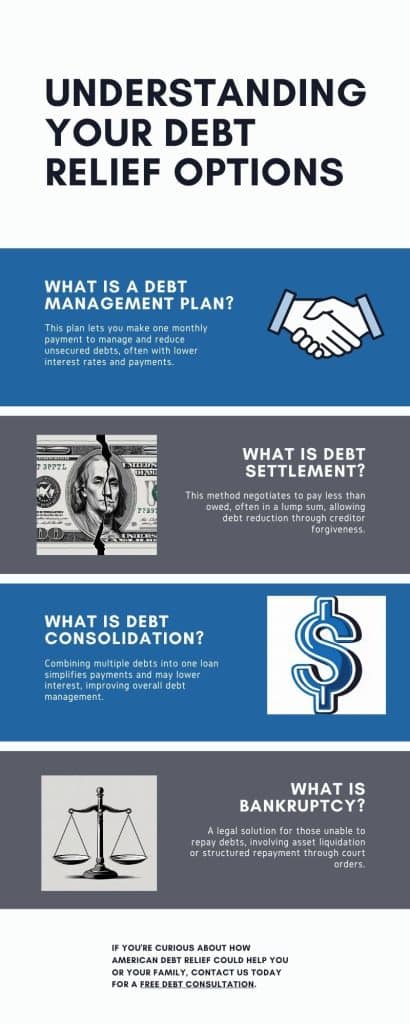
That maximizes cash in the short-term, and you may have 3 to 4 years to save toward the settlement quantity. Extremely hazardous to credit rating, mainly as a result of missed repayments and a negative "resolved" mark that might remain on your credit rating report for approximately 7 yearsMay be just option if various other options (debt consolidation, equilibrium transfer bank card, financial debt mercy) aren't possibleTypically needs a fee to the third party, which can balance out some or all of the cost savings from debt settlementMay assist you avoid insolvency if you've missed a number of paymentsNot all lenders deal with debt negotiation companies Financial obligation mercy may be right for you if you are experiencing a financial difficulty that makes it nearly difficult to pay for your financial obligation balances.
With a DMP, you make one month-to-month repayment to the credit counseling agency. Those funds are then dispersed to lenders of your unprotected financial obligations, such as bank card and installment lendings. The firm works with your lenders to reduce interest rates or waive charges, however some financial institutions might decline such concessions.
It can assist you pay down debt if you're able to protect a loan rate that's reduced than the ordinary rate of the accounts you're combining. You have to abstain from racking up financial debt on those freshly cleared accounts or your financial debt might expand also greater.

These cards commonly supply a 0% passion initial duration of approximately 21 months. That provides you lots of time to remove or significantly decrease your balance while making interest-free repayments. For some people encountering overwhelming financial debt, insolvency might be the only way to quit collection proceedings and legitimately resolve their debts.
Questions You Must Ask Before Signing Up for Beginners
You may need it if your lender or a collection agency ever before attempts to gather on the debt in the future. The letter could show you do not owe what the debt collection agency's documents show. Yes, in many cases, the IRS considers forgiven financial obligation as taxable revenue. When a loan provider forgives $600 or more, they are called for to send you Type 1099-C.
Debt mercy or negotiation nearly always hurts your credit. Anytime you resolve a financial debt for less than you owe, it may appear as "worked out" on your credit score report and impact your credit report score for 7 years from the day of settlement. Your credit can likewise go down considerably in the months resulting in the forgiveness if you fall back on settlements.
Getting My Knowing Your Protections Regarding Bankruptcy Proceedings To Work
This circumstance frequently results from underreporting income, not filing returns on time, or inconsistencies discovered throughout an IRS audit. The effects of gathering tax obligation financial debt are major and can include tax obligation liens, which give the IRS a lawful insurance claim to your residential property as safety and security for the debt.
Higher interest prices on readily available debt. Salaries and Financial institution Accounts IRS can levy (confiscate) incomes and financial institution accounts to satisfy the financial debt. Decreased revenue and interruption of necessary financial procedures. Residential or commercial property Seizure In extreme cases, the IRS can confiscate and offer home to cover the financial debt. Loss of valuable properties and possible variation.
Clinical depression, anxiousness, and other mental health problems. Social Preconception Encountering lawsuit from the IRS can bring social stigma. Damages to credibility and relationships. Work Opportunities A poor credit report score because of tax financial obligation can limit work opportunities. Problem searching for or keeping a task. Government Advantages Tax financial debt might impact eligibility for government benefits, such as Social Safety and Medicaid.
An Unbiased View of Debtor Rights When Undergoing Dating and Debt: How Financial Health Impacts Modern Relationships : APFSC
The OIC takes into consideration numerous aspects, including the taxpayer's revenue, expenditures, possession equity, and capacity to pay. Effectively bargaining an OIC can be complicated, calling for a complete understanding of the IRS's guidelines and a solid argument for why your offer lines up with your ability to pay. It is very important to keep in mind that not all applications are approved, and the procedure calls for in-depth monetary disclosure.
The IRS assesses your total monetary circumstance, including your revenue, expenditures, asset equity, and ability to pay. You should also be current with all declaring and payment demands and not be in an open personal bankruptcy proceeding. The IRS additionally considers your compliance background, evaluating whether you have a document of timely filing and paying taxes in previous years.
10 Simple Techniques For Additional Fees to Look For
The application process for an Offer in Concession entails several thorough steps. You need to complete and send IRS Type 656, the Deal in Compromise application, and Kind 433-A (OIC), a collection details statement for people. These types call for detailed economic information, consisting of information regarding your income, financial debts, costs, and possessions.
Back tax obligations, which are overdue tax obligations from previous years, can significantly enhance your overall internal revenue service financial obligation if not resolved quickly. This debt can accumulate rate of interest and late payment penalties, making the original quantity owed much larger with time. Failing to pay back tax obligations can cause the internal revenue service taking enforcement actions, such as providing a tax lien or levy against your residential or commercial property.
It is essential to address back taxes as soon as feasible, either by paying the sum total owed or by arranging a layaway plan with the internal revenue service. By taking aggressive actions, you can stay clear of the build-up of additional passion and fines, and avoid more aggressive collection actions by the internal revenue service.
One common reason is the idea that the taxpayer can pay the complete quantity either as a lump amount or via a settlement strategy. The IRS likewise thinks about the taxpayer's revenue, costs, property equity, and future earning potential. If these aspects show that the taxpayer can pay for to pay more than the used quantity, the IRS is likely to turn down the offer.
Post-Forgiveness Services Including Peer Resources Can Be Fun For Anyone
Dealing with Internal revenue service financial debt can be intricate and overwhelming. Tax obligation experts, such as CPAs, tax obligation lawyers, or registered agents, can give invaluable aid.

Table of Contents
Latest Posts

Policy Changes Influencing Debt Relief Procedures for Beginners

The smart Trick of Chapter 7 Essentials Before Filing That Nobody is Talking About
Pricing Transparency That Financial counseling for veterans in Alabama who feel stuck making only minimum payments Experts Eliminate Fundamentals Explained
More
Latest Posts
Policy Changes Influencing Debt Relief Procedures for Beginners
The smart Trick of Chapter 7 Essentials Before Filing That Nobody is Talking About